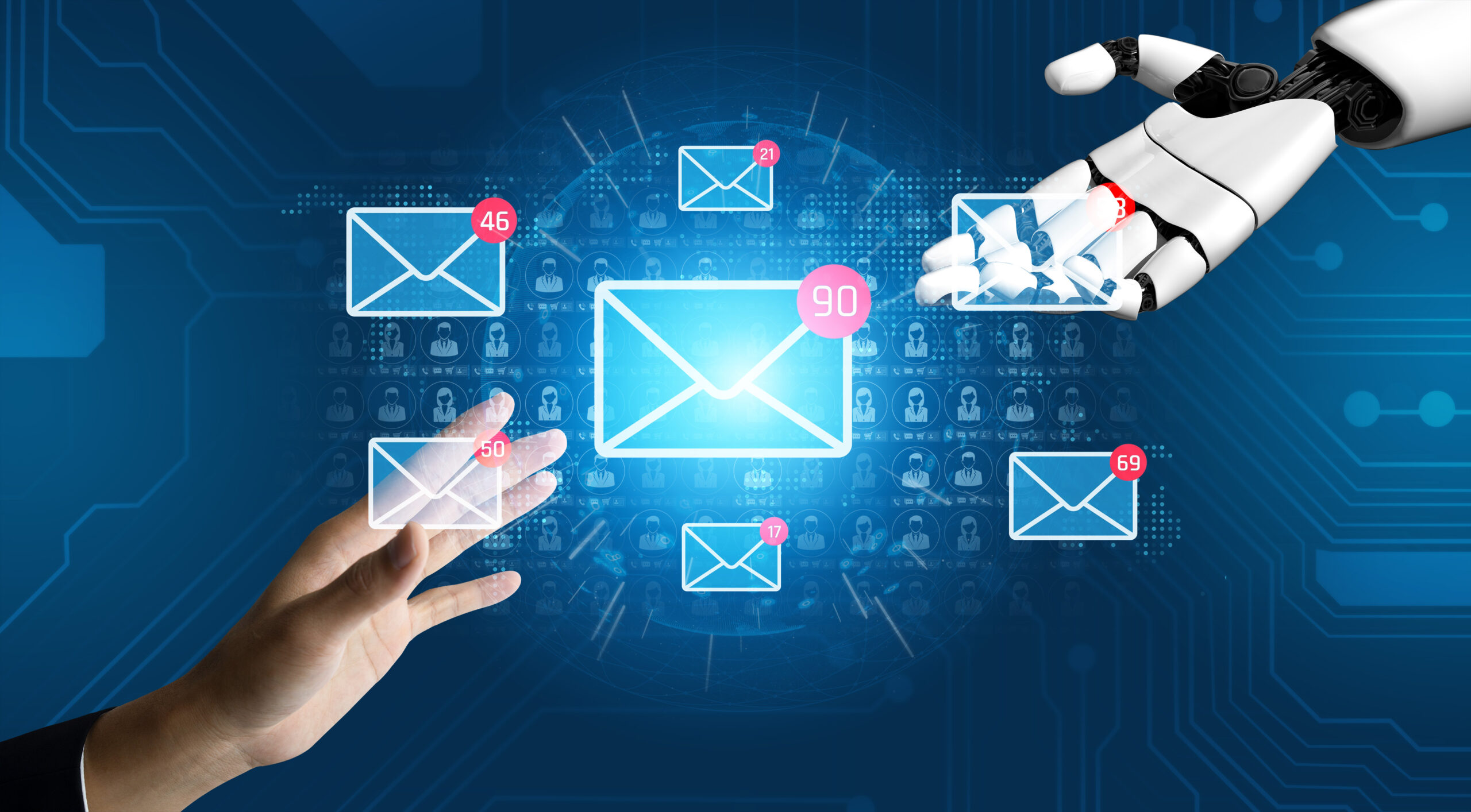
Too many newsletters? AI can make them easier to process, but it raises a question: who are marketers actually writing newsletters for – consumers or AI?
In January 2026, Google began building Gemini-powered summaries and an AI-powered inbox into Gmail – initially in English, with further languages and regions on the roadmap1. According to Forrester’s predictions for 2027, content will still be created by humans but increasingly consumed by machines2.
Newsletters therefore have to address two readers at once.
The first reader: artificial intelligence
According to 2026 research by Validity, 55% of consumers decide what to do with an email based on its AI-generated summary: 35% don’t read the email in full, 15% don’t open it at all and 5% delete it straight away3. As a result, 72% of marketers have already changed – or will soon change – their strategy for subject lines and preview text4.
In practice, this means that alongside the subject line, the first paragraph is becoming more important. Whatever we say clearly at the start of the email, in actual text, will be carried over into the summary. Anything that appears only in an image or gets lost among several offers, however, can easily be left out.
The second reader: an increasingly cautious human
According to Forrester, however, only 18% of US online adults trust information provided by AI2. Summaries are treated with scepticism too: just 10% fully believe they accurately reflect what the email says3. And 40% of consumers would trust a marketing email less if they knew it had been written by AI5.
Forrester draws a bold conclusion from this: in 2027, half of all brands will once again make human-created content a top priority, and it will become increasingly important to have real experts, customers and evidence behind brand claims6.
For newsletters, this means that a recognisable voice will stand out from generic, template-driven copy that anyone could produce. An expert email with a real name and face behind it, a genuine customer story or a personal recommendation from a colleague can be worth more than ten perfectly polished but soulless campaign emails.
When an ‘assistant’ makes the decision instead of the shopper
Forecasts suggest that in 2027, one in twenty US and UK consumers will shop through conversation with an AI assistant rather than in the traditional way6. The analyst firm calls this the ‘post-click’ era of digital commerce: by the time shoppers reach an online shop, the search, the comparison and often the decision itself have already taken place, so the click reveals less and less about what led to the purchase7.
This raises the question: is there still a need for newsletters if purchases are handled by an AI assistant? According to email marketing specialists, there is – but their role will shift. AI assistants are transforming discovery and transactions, not customer relationships, so email and SMS will remain the channels for building direct relationships with customers9.
In other words, the newsletter’s job is to nurture the relationship between the customer and the brand.
Fewer emails, more connection
Email volumes fell in 2025 compared with the previous year. At the same time, the companies achieving the best click-through rates send emails more often – just to smaller, more engaged audiences. And the programmes delivering the highest returns focus on relationship-building content, such as newsletters11.
Another likely shift is that rigid campaign calendars will give way to emails triggered by customer behaviour.
As clicks reveal less and less, measurement needs to step up too: the question is no longer how many people opened the email, but whether it contributed to purchases, return visits and trust in the brand.
How to prepare for 2027
A good place to start is with three simple questions:
What does AI see in our emails?
Look at our newsletters the way an AI summary would see them. Do the first few sentences make clear what we are offering and why? Is the key message there as actual text, or is it hidden in an image?
Who is behind the email?
Does our newsletter have a recognisable voice, face or expert? Can we back up our claims with real experience, customer stories or evidence?
Why would readers stay with us?
If search and comparison are increasingly done by AI, what do subscribers get from us that they can’t get anywhere else? Exclusive content, useful knowledge, community – or just more promotions?
In 2027, newsletters won’t disappear, but the way they reach their recipients will change. Whether they are seen will depend more and more on AI; whether readers trust them will still be down to us. The brands that do well will be the ones that write for both readers: clearly for AI, and authentically for people.
References
[1] https://blog.google/products-and-platforms/products/gmail/gmail-is-entering-the-gemini-era/
[2] https://www.forrester.com/blogs/predictions-2027-humans-reclaim-content-creation-machines-dominate-content-consumption/
[3] https://www.validity.com/press-releases/validity-research-reveals-consumers-let-ai-curate-their-inboxes-while-marketers-struggle-to-keep-up/
[4] https://www.demandgenreport.com/industry-news/news-brief/validity-72-of-marketers-are-adapting-email-strategies-for-ai-generated-inbox-summaries/55090/
[5] https://techintelpro.com/news/marketing/ai/validity-report-reveals-ai-gap-between-marketers-and-consumers
[6] https://www.forrester.com/press-newsroom/forresters-2027-b2c-marketing-cx-and-digital-predictions-rising-ai-costs-will-force-b2c-leaders-to-scale-back-a-third-of-ai-initiatives/
[7] https://www.forrester.com/blogs/predictions-2027-digital-commerce-enters-its-post-click-era/
[8] https://www.gartner.com/en/marketing/research/marketing-predictions/unlocked
[9] https://www.inboxarmy.com/blog/agentic-commerce-ecommerce-email-marketing/
[10] https://www.gartner.com/en/newsroom/press-releases/2025-06-25-gartner-predicts-over-40-percent-of-agentic-ai-projects-will-be-canceled-by-end-of-2027
[11] https://www.validity.com/press-releases/new-validity-research-reveals-how-ai-integration-is-reshaping-email-marketing-performance/
In hac habitasse platea dictumst. Praesent molestie, ante vel placerat rhoncus, eros leo varius sapien
Lorem ipsum dolor sit amet, consectetur adipiscing elit. Maecenas a placerat velit. Donec in turpis eu urna viverra rhoncus quis nec ex. Ut ullamcorper elit nisl, nec vehicula arcu posuere quis. Sed elementum, dolor ac maximus commodo, nibh sem lacinia ligula, placerat facilisis felis tellus sit amet ex. Aliquam erat volutpat. Pellentesque porttitor sit amet purus et facilisis. Morbi eu condimentum lacus. Nulla eget ante non leo semper lacinia. Mauris porttitor placerat arcu sit amet accumsan. Aliquam erat volutpat. Proin iaculis justo eget massa hendrerit tempus. Sed varius suscipit dolor, sit amet blandit risus eleifend a. Integer vehicula ac turpis et ultrices. Sed non felis id urna fermentum fermentum. Nam pulvinar, lectus eget tincidunt fermentum, libero nunc porttitor leo, ac fringilla turpis dui eget velit. Proin dictum tincidunt sollicitudin.