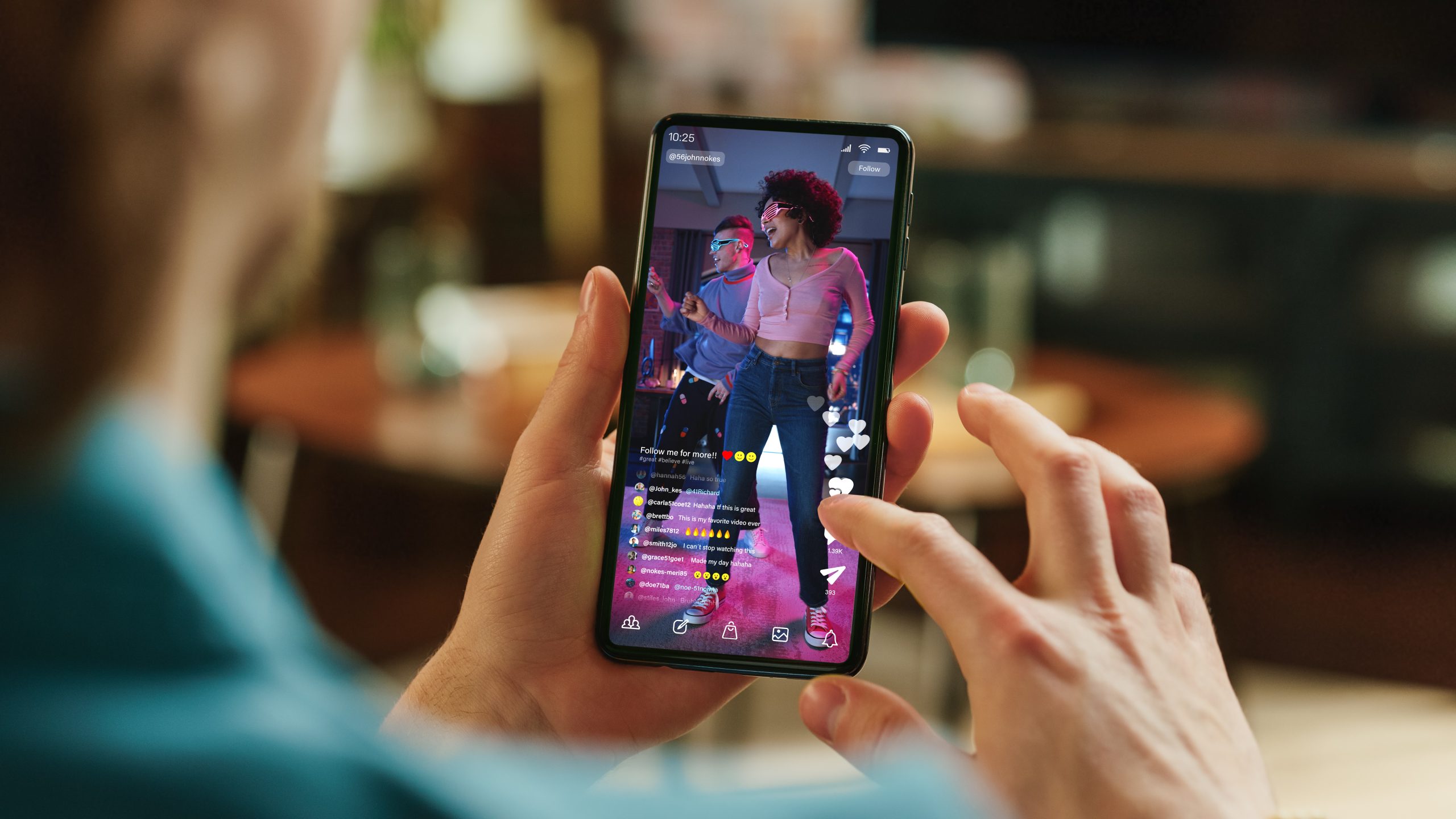
Fifteen seconds. A few years ago that was barely enough time for a commercial to get going; today an entire brand story fits inside it. Short-form video – the shared language of TikTok, Instagram Reels and YouTube Shorts – has become the most defining content type on social media in just a few years. But what makes the format so irresistible to viewers, and why are brands putting an ever-larger share of their marketing budgets behind it? Let’s take a closer look.
What do the numbers say?
- According to HubSpot’s 2026 State of Marketing report, short-form video is the highest-ROI content type: 49% of marketers ranked it first. [1]
- 81% of consumers want to see more short-form video from brands, and 72% of branded videos uploaded to social platforms already fall into this category. [3]
- YouTube Shorts racks up more than 70 billion views every day. [3]
- Average video length has shrunk from 168 seconds in 2016 to roughly 76 seconds, and some forecasts expect it to approach 40 seconds by 2026. [4]
- More than three-quarters of all video views happen on mobile. [3]
This is no passing fad, then, but a structural shift in how audiences consume content.
Why is short-form video so popular?
Part of why short-form video succeeds lies in the brain’s reward system. Every swipe to the next clip delivers a small hit of dopamine, creating powerful reinforcement: the viewer keeps chasing novelty and instant gratification. Researchers often call this phenomenon “TikTok brain,” and while its effects on attention are debated, one thing is certain from a marketing standpoint: this format works exactly the way our attention does today. [6]
On top of that comes the algorithm, which learns from our behaviour second by second and serves up a personalised, endless stream of content. Thanks to autoplay and the vertical, full-screen (9:16) format, there’s no decision and no click – just the next video. 71% of viewers decide within a few seconds whether a video is worth watching further – in other words, the opening frames decide everything. [5]
The new economics of attention
The rise of short-form video is also a story about the soaring value of attention. In a crowded feed, the viewer’s time is the scarcest resource, and whoever delivers their message fastest wins. It’s no surprise that short-form videos achieve on average about two and a half times the engagement of long-form content. [5]
This logic rewrites brand communication, too: “tell it in three minutes” gives way to “grab them in three seconds.” The hook – the attention-grabbing opener – the CTA (call to action) and captions (because most videos are watched without sound) are no longer extras, but the basics.
Why has it become brands’ favourite?
Brands don’t choose short-form video on a hunch, but because it performs measurably. A few reasons the format has moved to the centre of their strategies:
- Return on investment. 93% of video marketing professionals report strong returns, and short-form video tops the ROI rankings. [2]
- Conversion. In 2025, TikTok converts 45.5% of users into buyers – the highest rate among social platforms – while 57% of Instagram Reels viewers discover new brands through the feature. [3]
- Cost-efficiency. A smartphone and a good idea are enough to get started today, and AI-powered editing tools can save up to 80% of production time and budget. [3]
- Authenticity. Audiences – Gen Z in particular – reward raw, authentic, user-generated content (UGC) over polished, corporate messaging, and the short-form format naturally lends itself to exactly that.
Put differently: short-form video is at once cheaper, faster to produce and better at converting than most traditional formats – a rare combination in marketing.
Different platforms – what are their strengths?
Short-form video isn’t just one tool among many – it has become the native language of social media. For anyone building a brand today, the question is no longer “should we make short-form video,” but “how do we do it well.”
The recipe rests on a few principles: capture attention in the first few seconds, optimise for mobile and sound-off viewing, aim for authenticity over perfection, and tailor the message to each platform’s particular logic. Anything that feels forced, too long or too salesy, the viewer scrolls past with a single flick.
The good news is that this doesn’t take a studio – it takes strategy, a good story and respect for the format. The rest, as the numbers show, attention takes care of.
What does this mean for your brand?
Although the format is shared, the three major platforms each play to different strengths. TikTok is the engine of discovery and purchase intent, with strong community- and trend-driven dynamics. Instagram Reels excels at brand discovery and slots tightly into the existing Instagram ecosystem. And YouTube Shorts is unbeatable on sheer reach: in the first half of 2025 it posted the highest engagement rate – 7.91% – among short-form platforms. [3]
A good strategy, then, doesn’t optimise for a single platform but understands the logic of each surface and tailors the content to it.