
Before smart devices arrived, we left the office at the end of the workday and – in most cases – that was the end of work for the day. Today the office sits in our pocket and on our wrist, and it is no exaggeration to say that smart devices have revolutionised the way we work. The question is: at what cost?
The illusion and reality of “constant availability”
The spread of smart devices has fundamentally redrawn the boundary between work and private life – a boundary that is no longer spatial but temporal and psychological. And these boundaries are growing ever more blurred.
Researchers call this phenomenon “overconnectivity.” Its essence is that employees feel obliged to process messages and requests even outside working hours. This increases perceived workload, makes cognitive detachment harder, and degrades both mental health and sleep quality. [1]
The European Union’s own survey produced sobering figures too: people who regularly work from home are six times more likely to work during their free time, and twice as likely to work more than 48 hours a week, than their office-based colleagues. [2]
The paradox is striking: the promise of flexible work – that you can work anytime, from anywhere – in practice often means that you are expected to work all the time, from anywhere.
Technostress: the “occupational hazard” of the modern age
Stress tied to digital devices is not a new concept – the literature has referred to it as technostress for years. It is the phenomenon in which excessive or inappropriate use of digital technology causes physical and psychological symptoms. The typical hallmarks of technostress are workplace burnout and emotional exhaustion. [3]
Research increasingly points out, too, that digital burnout does not stem from technological pressure alone – it also reflects an imbalance between organisational expectations, management style, and employees’ psychological resources. Organisations that normalise constant availability put their people in a particularly exposed position. [4]
Loss of focus: a crisis of attention?
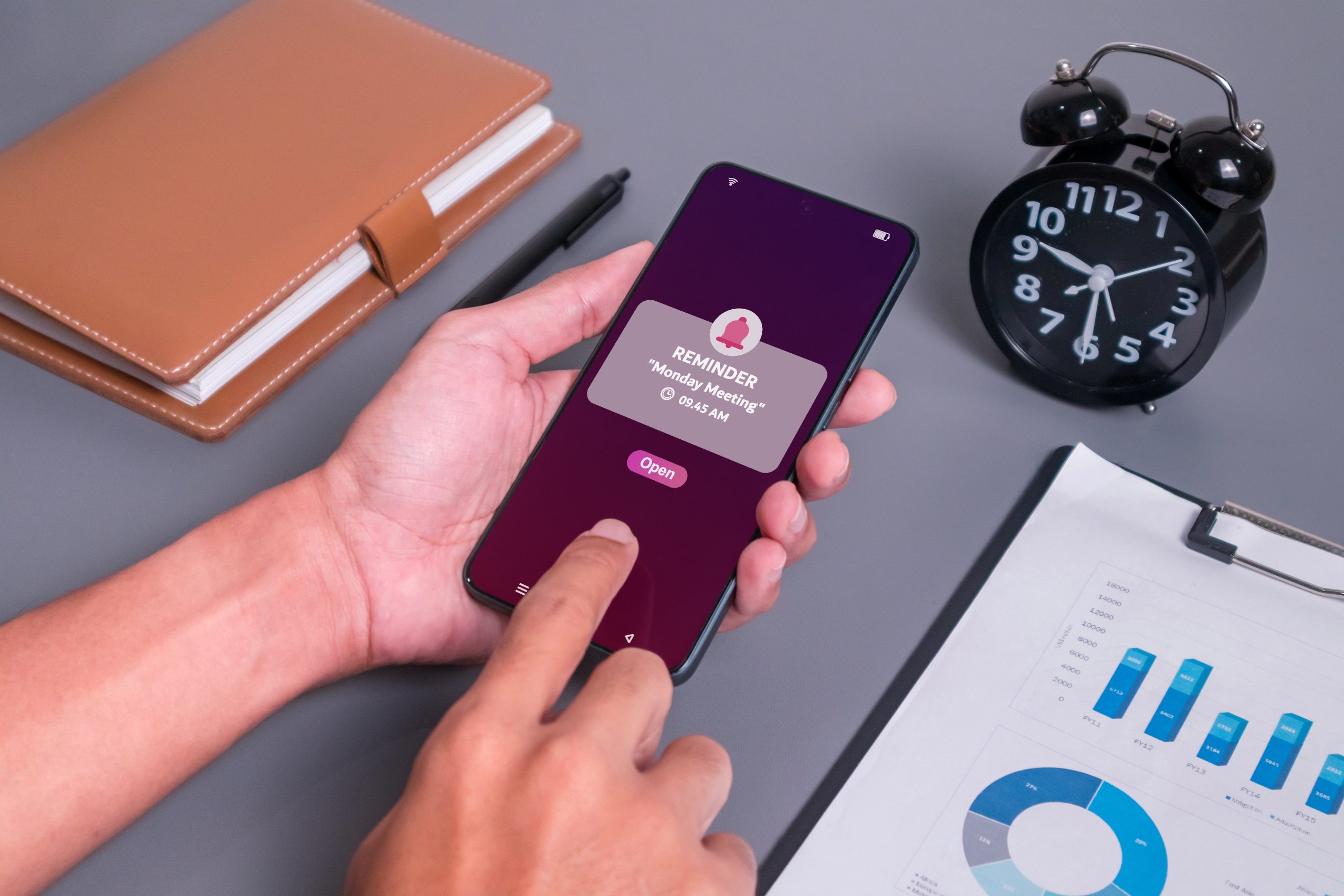
Constant availability can erode not only our health but also the quality of our work. Notifications create a peculiar vicious circle: they break our concentration, which then takes longer to restore than we tend to assume.
According to research, after a notification arrives the brain can need as much as 25 minutes to return fully to the original task – while 79% of employees feel that something regularly diverts their attention. [5]
According to Microsoft’s 2025 Work Trend Index, during working hours employees receive a notification of some kind every two minutes on average – amounting to roughly 275 notifications, emails, or chat messages a day. As a result, the average worker loses around two productive working hours per day to interruptions. [6]
Another important finding is that smartphone notifications disrupt concentration even when we do not pick up the phone. The mere awareness of a notification triggers an automatic attentional response – researchers call this “attentional capture.” According to a 2024 survey, 62% of employees reported that smartphone notifications disturb their concentration. [7]

Do we have the right to switch off?
The problem has not escaped policymakers either. Over the past decade, a number of countries have sought to protect employees’ right to rest and to disconnect at the legislative level.
France was the pioneer: in 2016 it introduced a law allowing employees to switch off their devices outside working hours. Companies with more than 50 employees are required to draw up a “code of conduct” defining the “off-limits hours” for email. [8]
By April 2024, 11 EU member states – among them Belgium, France, Greece, Ireland, Italy, Portugal, Spain, and Slovakia – had regulations in place on the right to disconnect.
In spring 2024, the European Commission launched a consultation with the social partners to prepare an EU-wide directive – so the process has gathered pace at the European level as well. [9]
Hungary has no such law as yet, but the subject is gaining ever more weight within the HR profession and in labour-relations dialogue. The question is whether regulation will get ahead of burnout, or merely react to it after the fact.
Is there a solution? Individual and organisational strategies
Legal regulation matters, but it is not enough. Real change also calls for a shift in mindset at both the organisational and the individual level.
At the individual level, the following strategies have proven effective:
- Managing notifications deliberately: enabling only the channels that genuinely matter.
- Introducing “deep-work periods”: the Pomodoro method or other time-blocking techniques support focused work.
- Strict disconnection: after a set time in the evening, we stop looking at work messages.
At the organisational level:
- Building an “after-hours silence” culture: written norms stating that no immediate reply is expected outside working hours.
- Favouring asynchronous communication over synchronous (real-time) communication.
- The four-day work week: fewer working hours do not reduce genuine productivity – in many cases they actually increase it.
Technology itself can help, too: AI-based well-being platforms can analyse communication patterns, calendar density, and after-hours activity, and can flag burnout risk weeks in advance. [10]